Craft a Polished Brand Impression with a Professional Email Footer
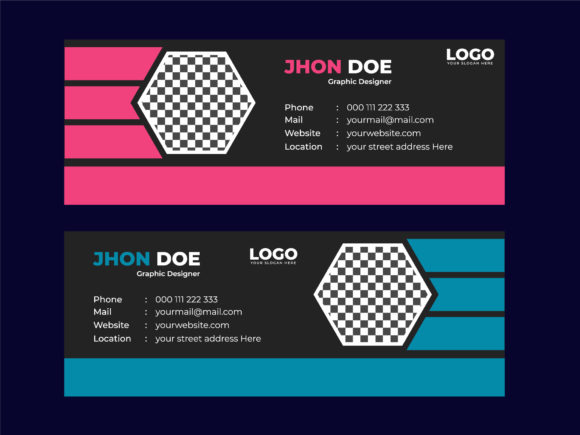
That block of text at the bottom of your emails is more than just a digital business card; it is prime real estate for reinforcing your brand identity. Every time you hit send, you are presenting an opportunity to build trust, provide essential contact details, and drive traffic to your website. If your current sign-off is just a typed name and a phone number, you are missing a significant chance to look established and organized. A professionally designed Email Signature or Email Footer Template transforms a standard sign-off into a powerful marketing asset. It is the final visual handshake in your correspondence, setting the tone for how clients, partners, and prospects perceive your level of professionalism.
The Power of Visual Consistency in Communication
In a world saturated with generic text, visual consistency is what separates amateur efforts from established brands. When you use a cohesive design system across your invoices, social media, and email correspondence, you create a psychological sense of reliability. A well-crafted footer acts as a visual anchor. It uses modern typography and structured layouts to guide the recipient's eye to the most important information—whether that is a scheduling link, a social media profile, or a legal disclaimer.
For designers, small business owners, and content creators, maintaining this consistency is crucial. If your Instagram feed has a specific aesthetic and your website uses a particular color palette, your email footer should bridge that gap. This alignment helps with brand recognition. When a client sees your email in their inbox, the footer should immediately confirm that the message is coming from a credible, professional source before they even read the body text.
Why Editable Design Assets Matter for Your Workflow
One of the biggest hurdles in creating a custom email footer is the technical barrier. Many entrepreneurs know what they want visually but struggle to execute it using basic design tools. This is where high-quality, editable design assets become invaluable. Instead of building a layout from scratch, you can start with a professional foundation that is already structured for visual hierarchy.
The specific templates discussed here are designed for seamless integration into professional workflows, particularly for those using Adobe Illustrator. Because they come in AI and EPS formats, they offer a level of flexibility that raster images simply cannot match. You are not just getting a static image; you are getting a fully functional design file. This includes well-organized layers, which allow you to isolate specific elements—like a logo, a divider line, or a social icon—without disrupting the rest of the design. For a busy small business owner or a marketing professional, this saves hours of frustration. You can easily swap out colors to match your specific hex codes or adjust the spacing to accommodate a longer phone number.
Practical Applications Beyond the Inbox
While the primary function is at the bottom of your emails, the versatility of these design files extends much further. Because the templates are provided in AI, EPS, and PDF formats at 300 DPI, they are print-ready and scalable. This makes them a dual-purpose asset for both digital and physical marketing.
Consider the value of visual consistency when expanding your brand touchpoints. A graphic designer might use the footer layout as a basis for a "Contact Us" section on a client's website. A packaging designer might adapt the typography and icon styles for the back panel of a product box, ensuring the contact details match the email correspondence perfectly. Similarly, if you are creating digital products or lead magnets, the footer style can be repurposed for the credits page or the "About the Author" section.
Furthermore, the inclusion of smart layers is a technical feature that offers practical benefits for mockups. If you need to present a branding package to a client, you can easily place your email footer design into a smartphone or laptop mockup to show them exactly how it will look in a real-world context. This elevates your presentation from a simple flat file to a comprehensive brand experience.
Typography and Readability: Getting the Details Right
An email footer has very limited space, making readability the most critical factor. If the font is too small or the contrast is too low, the information becomes useless. The best templates utilize free Google Fonts, which ensures that the typography is not only beautiful but also web-safe and accessible. Using standard, high-quality fonts prevents the issue of text rendering incorrectly on different email clients (like Outlook vs. Gmail).
When customizing your file, pay attention to the font pairing. A common best practice in editorial design and web design is to pair a clean sans serif font for contact details with a more distinct style for your name or title. This contrast creates a hierarchy that makes the footer scannable. For example, using a bold weight for your name and a lighter weight for your address helps the reader process the information quickly.
Since the files are in RGB Format Color, they are optimized for screens. This is vital because email is primarily a digital medium. You want colors that pop on a monitor without being garish. However, because the files are fully editable, if you plan to use the design for print materials, you can easily convert the color mode to CMYK within Illustrator to ensure accurate printing on business cards or letterheads.
Streamlining Your Brand Identity Strategy
For the creative entrepreneur or freelancer, time is money. Having a library of design assets that are ready to be customized is a strategic advantage. When you purchase a template that includes well-organized layers and smart objects, you are essentially buying back the time you would have spent aligning pixels and adjusting kerning.
This efficiency allows you to focus on the bigger picture of your brand identity. Instead of worrying about whether your social media icons are aligned correctly, you can focus on crafting the perfect call-to-action for your email campaign. Whether you are a blogger linking to your latest post, a marketer highlighting a seasonal sale, or a designer showcasing a portfolio link, the template provides the structure. You provide the strategy.
Ultimately, a professional Email Signature or Email Footer Template is an investment in how you communicate. It signals to your audience that you care about the details, and in business, the details are often what close the deal. By utilizing editable, high-resolution assets, you ensure that every email you send is a polished reflection of your brand's quality.